
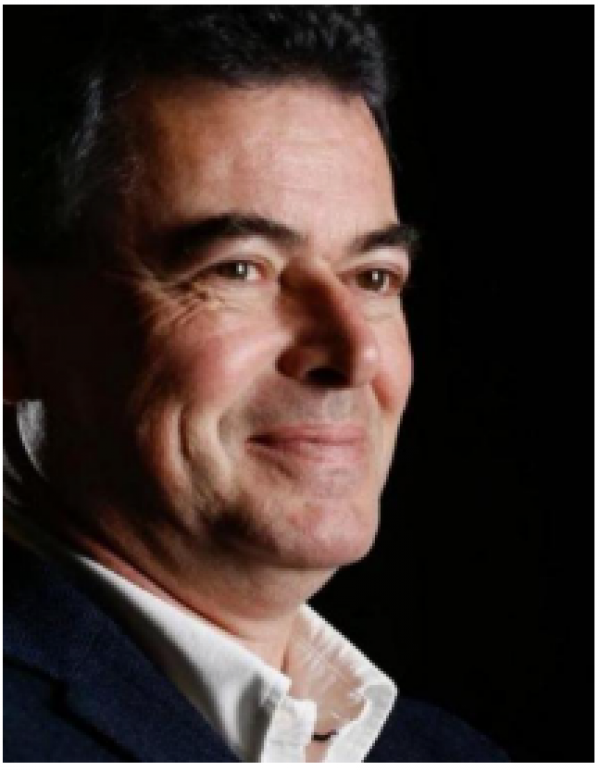
Dr. Barry Hardy is the Chief Executive Officer (CEO) at Edelweiss Connect where he is leading its team supporting the development of new integrating solutions in industrial product design and safety assessment and the translation of research methods to industrial practice. Example recent commercial developments include the creation of the SaferWorldbyDesign platform (https://www.saferworldbydesign.com/), and the development of the SaferSkin (https://saferworldbydesign.com/saferskin/) and EdelweissData products (https://saferworldbydesign.com/edelweissdata/). He is currently leading the development of risk assessment knowledge infrastructure and solutions, including new approach methods, SaferbyDesign, sustainability and next generation risk assessment solutions (https://www.risk-hunt3r.eu).
He coordinated the OpenTox project in predictive toxicology and is currently President of the OpenTox Association, founded in 2015 as an international non-profit organisation promoting an open knowledge community approach to new methods in predictive toxicology and the 3Rs principles of the refinement, reduction and replacement of animal experiments. Previously, he led the infrastructure development for the IMI EBiSC stem cell banking project, the eNanoMapper project developing solutions supporting nanotechnology safety assessment, OpenRiskNet infrastructure development supporting risk assessment, and knowledge infrastructure development for ACEnano, NanoCommons and EU-ToxRisk.
Dr. Hardy obtained his Ph.D. in 1990 from Syracuse University working in computational science. He was a National Research Fellow at the FDA Center for Biologics and Evaluation, a Hitchings-Elion Fellow at Oxford University and CEO of Virtual Environments International. He was a pioneer in the 1990s in the development of Web technology applied to virtual scientific communities and conferences. He has developed technology solutions for internet-based communications, tutor-supported e-learning, laboratory automation systems, and computational science and informatics. In recent years he has also been active in the field of knowledge management as applied to supporting innovation, communities of practice, and collaboration, with a particular focus on developing new evidence-based methods in predictive toxicology and safety assessment.
Safe and Sustainable by Design Training
Session 3 (Friday, 15:00–17:00 CEST, 21 August)
Safe and Sustainable by Design: Evaluating Heterogeneous Evidence Supporting Decisions
Abstract
SSbD decisions rarely depend upon a single study or dataset. Instead, decision-makers must integrate heterogeneous evidence originating from experimental studies, computational models, human expertise, literature reviews, regulatory sources, sustainability metrics, and business considerations.
This session introduces practical frameworks for evaluating evidence quality, reliability, relevance, uncertainty, and confidence. Participants will learn how to construct evidence packages that support transparent and defensible decisions. The session will also demonstrate how uncertainty and conflicting evidence can be managed through structured weight-of-evidence approaches.
Using a realistic SSbD case study, participants will integrate diverse evidence streams and formulate a justified recommendation.
Learning Objectives
Participants will:
- Understand evidence quality concepts
- Learn weight-of-evidence methodologies
- Evaluate uncertainty and confidence
- Integrate experimental and computational evidence
- Construct transparent evidence packages
- Defend an SSbD recommendation
Agenda
Part 1 – What Counts as Evidence? (15 min)
- Data vs information vs knowledge vs evidence
- Regulatory perspectives
- Scientific perspectives
- Context of use
Part 2 – Evaluating Evidence Quality (20 min)
- Reliability
- Relevance
- Adequacy
- Applicability domains
- Model validation
- FAIR evidence principles
Part 3 – Weight-of-Evidence and Confidence (20 min)
- Integrating multiple evidence streams
- Handling conflicting evidence
- Uncertainty analysis
- Confidence scoring
- Decision criteria
Exercise 3 (30 min)
Evidence Integration Workshop
Participants receive:
- Experimental results
- Literature findings
- QSAR predictions
- Exposure estimates
- Life Cycle Information
- Sustainability metrics
Task:
- Assess confidence
- Identify uncertainties
- Develop a recommendation
Final Case Study (30 min)
Groups present and discuss:
- Their recommendation
- Supporting evidence
- Key uncertainties
- Additional information needed
Wrap-Up (5 min)
Key Take-Home Messages
- SSbD is fundamentally an evidence-based decision process.
- AI can dramatically improve efficiency but requires human oversight.
- FAIR knowledge infrastructures are essential for trustworthy assessments.
- Transparent evidence packages increase confidence and reproducibility.
- Decision quality depends not on the quantity of data, but on the quality, relevance, and integration of evidence.