
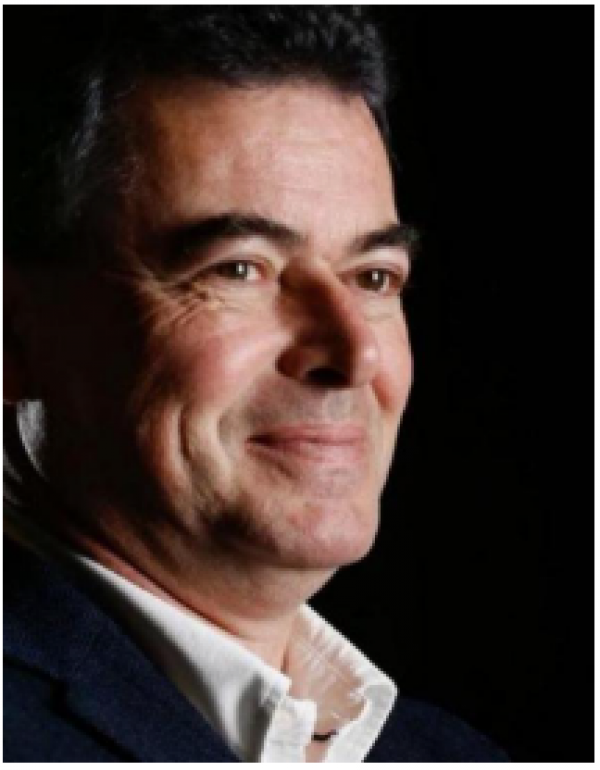
Dr. Barry Hardy is the Chief Executive Officer (CEO) at Edelweiss Connect where he is leading its team supporting the development of new integrating solutions in industrial product design and safety assessment and the translation of research methods to industrial practice. Example recent commercial developments include the creation of the SaferWorldbyDesign platform (https://www.saferworldbydesign.com/), and the development of the SaferSkin (https://saferworldbydesign.com/saferskin/) and EdelweissData products (https://saferworldbydesign.com/edelweissdata/). He is currently leading the development of risk assessment knowledge infrastructure and solutions, including new approach methods, SaferbyDesign, sustainability and next generation risk assessment solutions (https://www.risk-hunt3r.eu).
He coordinated the OpenTox project in predictive toxicology and is currently President of the OpenTox Association, founded in 2015 as an international non-profit organisation promoting an open knowledge community approach to new methods in predictive toxicology and the 3Rs principles of the refinement, reduction and replacement of animal experiments. Previously, he led the infrastructure development for the IMI EBiSC stem cell banking project, the eNanoMapper project developing solutions supporting nanotechnology safety assessment, OpenRiskNet infrastructure development supporting risk assessment, and knowledge infrastructure development for ACEnano, NanoCommons and EU-ToxRisk.
Dr. Hardy obtained his Ph.D. in 1990 from Syracuse University working in computational science. He was a National Research Fellow at the FDA Center for Biologics and Evaluation, a Hitchings-Elion Fellow at Oxford University and CEO of Virtual Environments International. He was a pioneer in the 1990s in the development of Web technology applied to virtual scientific communities and conferences. He has developed technology solutions for internet-based communications, tutor-supported e-learning, laboratory automation systems, and computational science and informatics. In recent years he has also been active in the field of knowledge management as applied to supporting innovation, communities of practice, and collaboration, with a particular focus on developing new evidence-based methods in predictive toxicology and safety assessment.
Safe and Sustainable by Design Training
Session 2 (Thursday, 15:00–17:00 CEST, 20 August)
Safe and Sustainable by Design: AI-Assisted Resources and Tasks
Abstract
Modern SSbD assessments increasingly depend upon large volumes of heterogeneous information originating from experimental studies, regulatory dossiers, scientific literature, databases, predictive models, and sustainability metrics. Artificial Intelligence offers new opportunities to accelerate these activities while improving consistency, transparency, and traceability.
This session demonstrates how AI-assisted workflows can support SSbD assessments through data discovery, evidence gathering, hazard characterization, predictive modelling, knowledge graph construction, alternative identification, and report generation. Particular emphasis will be placed on maintaining scientific rigor, provenance, explainability, and human oversight.
Participants will explore practical examples of human-AI collaboration and learn how AI can augment expert decision-making rather than replace it.
Learning Objectives
Participants will:
- Understand where AI can support SSbD workflows
- Learn AI-assisted evidence gathering methods
- Explore predictive modelling and NAM-based approaches
- Understand FAIR data and knowledge infrastructures
- Learn principles of trustworthy AI for scientific decision support
- Build an AI-assisted hazard table
Agenda
Part 1 – AI in SSbD (15 min)
- Current opportunities
- Limitations of generative AI
- Human-AI collaboration models
- Explainability and transparency
Part 2 – AI-Assisted Tasks Across the SSbD Workflow (25 min)
- Literature review
- Regulatory intelligence
- Data extraction
- Hazard identification
- Alternative generation
- Evidence synthesis
Part 3 – FAIR Knowledge Infrastructures (25 min)
- Data → Information → Knowledge → Evidence
- FAIR principles
- Provenance
- Knowledge graphs
- Reproducible workflows
Demonstration (30 min)
Examples using:
- Hazard table generation
- Read-across support
- QSAR workflows
- AOP exploration
- Occupartional Safety
- Consumer Health
- Environmental Scoring
- Life Cycle Assessment
- Evidence package generation
Exercise 2 (25 min)
AI-Assisted Hazard Table Construction
Teams build a hazard table for a candidate ingredient/material using:
- Regulatory sources
- Literature evidence
- Model predictions
- AI-assisted evidence extraction
Discussion (10 min)
- Risks of AI misuse
- Hallucinations
- Quality assurance
- Human review checkpoints