
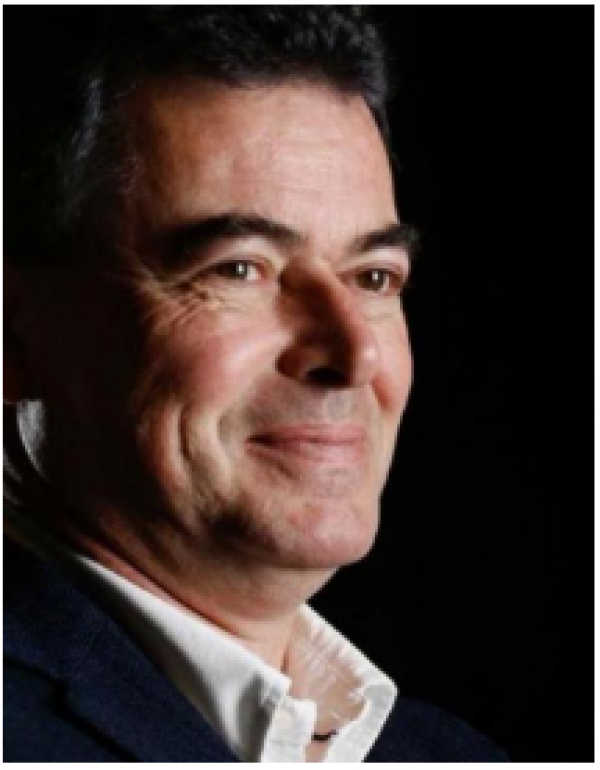
Dr. Barry Hardy is the Chief Executive Officer (CEO) at Edelweiss Connect where he is leading its team supporting the development of new integrating solutions in industrial product design and safety assessment and the translation of research methods to industrial practice. Example recent commercial developments include the creation of the SaferWorldbyDesign platform (https://www.saferworldbydesign.com/), and the development of the SaferSkin (https://saferworldbydesign.com/saferskin/) and EdelweissData products (https://saferworldbydesign.com/edelweissdata/). He is currently leading the development of risk assessment knowledge infrastructure and solutions, including new approach methods, SaferbyDesign, sustainability and next generation risk assessment solutions (https://www.risk-hunt3r.eu).
He coordinated the OpenTox project in predictive toxicology and is currently President of the OpenTox Association, founded in 2015 as an international non-profit organisation promoting an open knowledge community approach to new methods in predictive toxicology and the 3Rs principles of the refinement, reduction and replacement of animal experiments. Previously, he led the infrastructure development for the IMI EBiSC stem cell banking project, the eNanoMapper project developing solutions supporting nanotechnology safety assessment, OpenRiskNet infrastructure development supporting risk assessment, and knowledge infrastructure development for ACEnano, NanoCommons and EU-ToxRisk.
Dr. Hardy obtained his Ph.D. in 1990 from Syracuse University working in computational science. He was a National Research Fellow at the FDA Center for Biologics and Evaluation, a Hitchings-Elion Fellow at Oxford University and CEO of Virtual Environments International. He was a pioneer in the 1990s in the development of Web technology applied to virtual scientific communities and conferences. He has developed technology solutions for internet-based communications, tutor-supported e-learning, laboratory automation systems, and computational science and informatics. In recent years he has also been active in the field of knowledge management as applied to supporting innovation, communities of practice, and collaboration, with a particular focus on developing new evidence-based methods in predictive toxicology and safety assessment.
Safe and Sustainable by Design Training
Session 1 (Wednesday, 17:00-19:00 CEST, 19 August)
Safe and Sustainable by Design: Methodology and Workflows
Abstract
Safe and Sustainable by Design (SSbD) is increasingly becoming a central framework for innovation within chemicals, materials, products, and technologies. However, many organisations struggle to translate high-level SSbD principles into practical assessment workflows that support real-world decision making.
This session introduces the foundations of SSbD and demonstrates how evidence-based workflows can be used to integrate safety, sustainability, functionality, and innovation objectives throughout the product lifecycle. Participants will learn how to structure an SSbD assessment using stage-gated workflows, hazard and exposure evaluation, sustainability screening, alternatives assessment, and decision support approaches.
Through practical examples from chemicals, cosmetics, materials, and PFAS substitution projects, participants will explore how SSbD can be implemented from early innovation through product development and regulatory evaluation.
Learning Objectives
Participants will:
- Understand the policy and scientific foundations of SSbD
- Understand the relationship between innovation, safety, sustainability, and performance
- Learn a structured SSbD workflow from problem formulation to decision making
- Understand Tier 1, Tier 2, and Tier 3 assessments
- Learn how evidence packages support transparent decision making
- Explore real-world industrial case studies
Agenda
Part 1 – Why SSbD? (20 min)
- Green Deal and Chemicals Strategy for Sustainability
- Innovation challenges
- Why "safe" alone is not enough
- Introduction to SSbD principles
Part 2 – The SSbD Framework (30 min)
- Problem formulation
- Context of use
- Functional requirements
- Hazard assessment
- Exposure assessment
- Environmental sustainability assessment
- Life Cycle Assessment
- Techno-economic considerations
Part 3 – SSbD Workflows and Decision Gates (30 min)
- Stage-gated innovation
- Tier 1 screening
- Tier 2 refinement
- Tier 3 integrated assessment
- ASPA-inspired evidence workflows
Exercise 1 (20 min)
Building an SSbD Assessment Plan
Participants define:
- Scope
- Problem Formulation
- Product/system
- Intended function
- Stakeholders
- Decision context
- Initial hazard and sustainability questions
Case Study Discussion (20 min)
Examples:
- PFAS substitution
- Cosmetic ingredient replacement
- Sustainable coating development
- Advanced materials assessment