
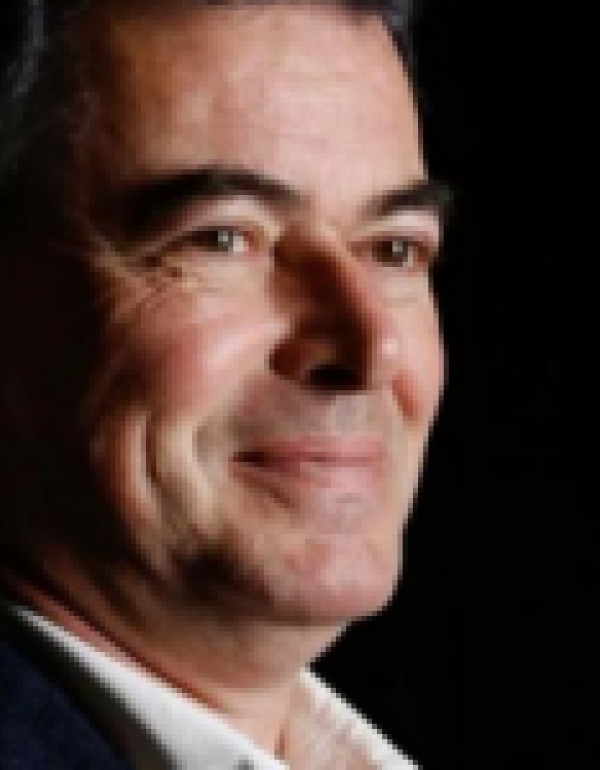
Dr. Barry Hardy is the Chief Executive Officer (CEO) at Edelweiss Connect where he is leading its team supporting the development of new integrating solutions in industrial product design and safety assessment and the translation of research methods to industrial practice. Example recent commercial developments include the creation of the SaferWorldbyDesign platform (https://www.saferworldbydesign.com/), and the development of the SaferSkin (https://saferworldbydesign.com/saferskin/) and EdelweissData products (https://saferworldbydesign.com/edelweissdata/). He is currently leading the development of risk assessment knowledge infrastructure and solutions, including new approach methods, SaferbyDesign, sustainability and next generation risk assessment solutions (https://www.risk-hunt3r.eu).
He coordinated the OpenTox project in predictive toxicology and is currently President of the OpenTox Association, founded in 2015 as an international non-profit organisation promoting an open knowledge community approach to new methods in predictive toxicology and the 3Rs principles of the refinement, reduction and replacement of animal experiments. Previously, he led the infrastructure development for the IMI EBiSC stem cell banking project, the eNanoMapper project developing solutions supporting nanotechnology safety assessment, OpenRiskNet infrastructure development supporting risk assessment, and knowledge infrastructure development for ACEnano, NanoCommons and EU-ToxRisk.
Dr. Hardy obtained his Ph.D. in 1990 from Syracuse University working in computational science. He was a National Research Fellow at the FDA Center for Biologics and Evaluation, a Hitchings-Elion Fellow at Oxford University and CEO of Virtual Environments International. He was a pioneer in the 1990s in the development of Web technology applied to virtual scientific communities and conferences. He has developed technology solutions for internet-based communications, tutor-supported e-learning, laboratory automation systems, and computational science and informatics. In recent years he has also been active in the field of knowledge management as applied to supporting innovation, communities of practice, and collaboration, with a particular focus on developing new evidence-based methods in predictive toxicology and safety assessment.
OpenTox Virtual Conference 2026
OpenTox 2.0: An Evidence-Centered Reference Architecture for Next Generation Predictive Toxicology and AI-Assisted Decision Support
Predictive toxicology has evolved dramatically since the original OpenTox framework was introduced in 2010. New Approach Methodologies (NAMs), mechanistic models, FAIR knowledge infrastructures and artificial intelligence (AI) offer unprecedented opportunities to advance human and environmental safety assessment. Yet a fundamental challenge remains: how can we transform increasingly diverse scientific information and computational predictions into trustworthy evidence supporting transparent and accountable decisions?
This lecture introduces OpenTox 2.0, a proposed evidence-centered reference architecture that extends the original OpenTox principles of interoperability, openness and reproducibility towards contextual scientific evidence assessment and AI-assisted decision support. We will examine its six conceptual layers, canonical information model and five proposed composable conformance profiles, showing how they connect scientific resources, computational services, workflows, evidence assessments and accountable decisions.
A practical illustration will explore conflicting in silico predictions and demonstrate how OpenModel documentation, evidence-based ASPA workflows and OpenTox 2.0 architectural concepts can support model evaluation, uncertainty assessment and transparent weight-of-evidence reasoning. Applications to Next Generation Risk Assessment (NGRA) and Safe and Sustainable by Design (SSbD) will also be considered.
Looking ahead, we will explore the opportunities and responsibilities associated with increasingly capable AI systems. Drawing on Isaac Asimov's original Three Laws of Robotics and a recently proposed extension comprising a foundational Zeroth Law and eleven principles, we will consider how truthfulness, epistemic humility, human oversight and responsible governance can inform trustworthy scientific AI.
Finally, we will announce the establishment of the OpenTox Evidence Science Working Group, inviting the international community to collaborate on elaborating, implementing and independently testing OpenTox 2.0.
Our ambition is to move beyond interoperable models towards evidence-centered scientific systems that enable more transparent, reproducible and defensible decisions for a safer and more sustainable future.
References
- Hardy, B., & Ali, A. (2026). OpenTox 2.0: A Perspective on the Principles for Predictive Toxicology and Risk Assessment Applications in the Era of Integrated New Approach Methods, Computational Modelling and Artificial Intelligence. Zenodo. https://doi.org/10.5281/zenodo.19458289
- Hardy, B. (2026). Beyond Asimov's Three Laws: Eleven Principles for AI, Humanity and a Flourishing Future. Zenodo. https://doi.org/10.5281/zenodo.24218481